

Inside the AI-Native Society: Part II
From medical advice to everyday humour, language bias is shaping AI’s blind spots
What does it take to create a society where artificial intelligence is embedded across infrastructure, industry and public services? The Observer’s four-part series explores how Abu Dhabi is reshaping daily life in the AI age
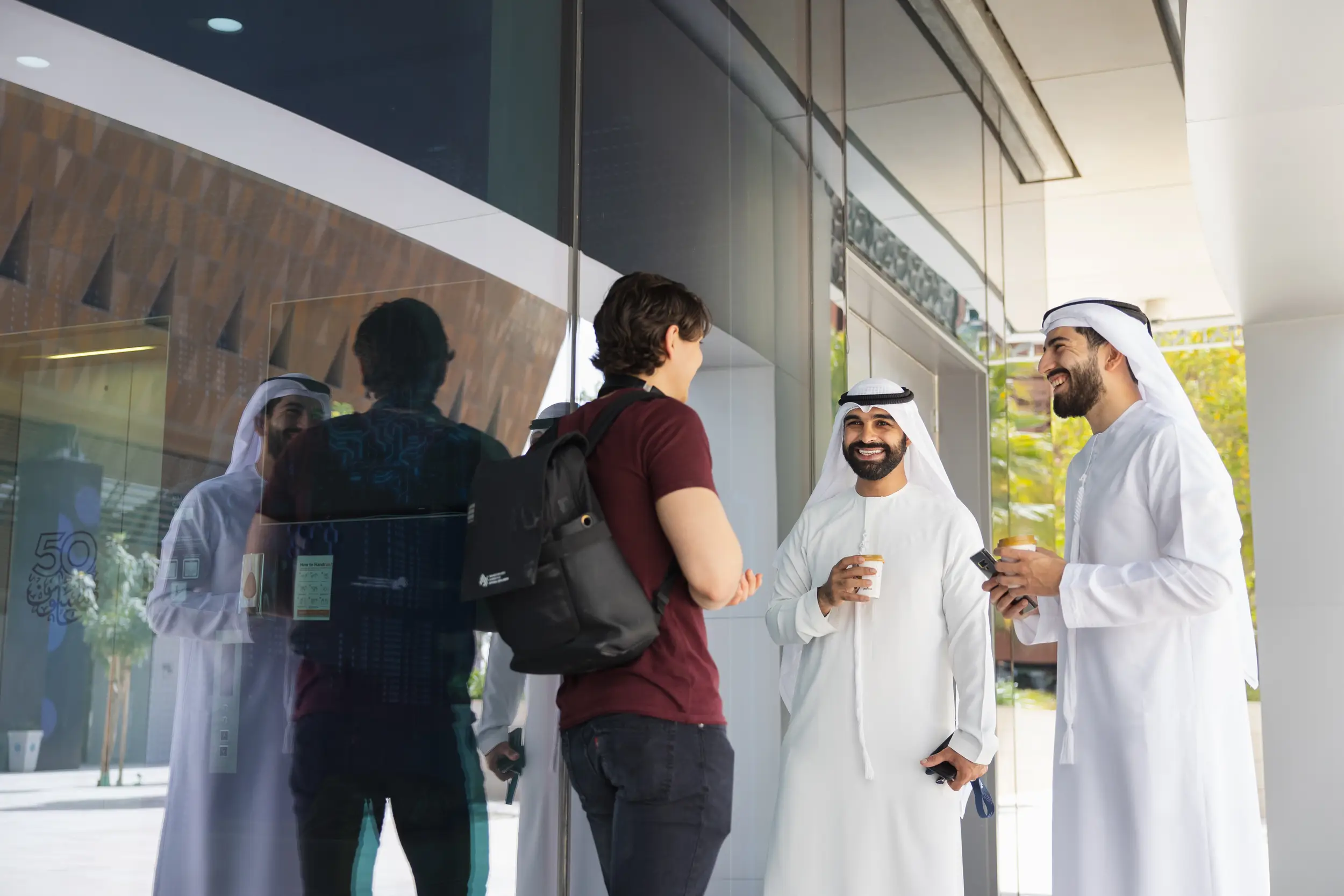
With that imbalance comes a set of assumptions: whose knowledge counts, whose cultural reference points emerge, whose way of speaking is understood. “Local history, institutions and everyday experience may be documented mainly in a particular language,” says Preslav Nakov, professor of natural language processing at Abu Dhabi’s Mohamed bin Zayed University of Artificial Intelligence (MBZUAI).
A model without exposure to a given language has less opportunity to learn those cultural patterns. “My ambition,” he continues, “is that the language in which you ask a question should not determine the quality of the help you receive.” At MBZUAI, researchers are building AI models that better reflect the kaleidoscope of languages and contexts in which people live and converse, with implications far beyond Arabic.
The Tower of BAIbel
For users beyond the Anglosphere, English-centric design of AI models can impose a dual penalty: higher costs and poorer results. “Languages differ in how they build words, organise sentences and connect meaning to context,” explains Nakov. “A design choice that works conveniently for English may represent another language inefficiently or make important distinctions harder for the model to learn.”
The cost problem, meanwhile, comes down to tokenisation, the process by which large language models (LLMs) break text into chunks (“tokens”) before processing it. English can often be represented efficiently because the model’s vocabulary contains useful words and word fragments: “For example, the word ‘unpredictable’ can be broken into ‘un’, ‘predict’ and ‘able’,” says Nakov. For under-represented languages, like Arabic, more tokens may be needed to represent the same content – 44% more than English, on average, in one GPT-4o evaluation. “This is a consequence of how the system was designed and trained, rather than a fixed property of Arabic,” he explains.
More tokens mean higher memory demands and longer time lags to generate replies, and anything priced per token costs more, which is how “language inequality can show up on the computing bill,” summarises Nakov.
Even with infinite amounts of compute, English-centric models would still provide a lower-quality experience for those speaking other languages, because of how context shapes meaning. “With a proverb, identifying the words and their literal meaning is only the beginning. Why did the speaker choose it here? Is it offering reassurance, criticism, or advice? What does it mean culturally, beyond the literal wording?” he asks. “Similar issues arise with politeness, humour and indirect requests.”
Hisham Cholakkal, associate professor of computer vision at MBZUAI, sees this playing out in the high-stakes context of healthcare: “There are many healthcare foundation models and healthcare LLMs developed across the globe, but they lack the cultural context if you want to deploy them in the Middle East and North Africa region,” he says, “and it’s almost impossible to deploy a model in a hospital unless we tailor-make it for the region-specific requirements and patient data.”
Users could find that AI models speak their language accurately, but with contextual deficits. “When a model misses those expectations, it may give an answer that is grammatically excellent but socially inappropriate. The smoothness of the reply makes the underlying misunderstanding harder to notice,” says Nakov. The performance gap between Arabic and English increases on more complex medical questions, while model-reported confidence is also an unreliable indicator of correctness, according to recent research on Arabic and English medical question-answering.
That makes language inequality more than a question of convenience or accuracy, especially in high-stakes scenarios. “Linguistic diversity is a reality that AI must serve,” concludes Nakov.
Beyond translation
Reflecting linguistic diversity requires more than semantic translation. As Cholakkal cautions: “If you try to address language barriers with a translator, it’s still not going to understand the culture.”
At MBZUAI’s Institute of Foundation Models (IFM), researchers are advancing linguistic diversity by training foundation models from the outset and adapting them to specific languages and cultures. Jais, an open-source, bilingual Arabic and English language model, builds on the institute’s K2 Horizon models, combining broad reasoning and agentic capabilities with deeper understanding of Arabic, its dialects and cultural contexts. The aim is AI that understands, writes and carries out practical tasks naturally in Arabic.
Which route depends on the use case: “The decision depends on the available data and computing resources, the starting model’s capabilities, and what we want the resulting system to do,” explains Nakov.
The first Jais started on a fresh canvas at IFM. “We trained it from scratch, which gave us control over the vocabulary, the balance of languages and the training process from the outset,” Nakov explains. The model is named Arabic-centric, not just an Arabic model, purposely: “It also understands English and addresses Arabic dialects, so the purpose is to put Arabic at the centre while drawing on knowledge across languages,” he says. Jais 2 now comes in 8 billion- and 70bn-parameter versions, trained on more than 600bn curated Arabic tokens alongside English and code, and is available through Hugging Face platform, cloud providers such as Microsoft Azure or Amazon web services (AWS) and a dedicated Jais Chat web interface.
But whichever approach is used, the process involves significant scientific work. “We have to decide what knowledge to retain, what to add and how to avoid damaging useful existing capabilities,” Nakov says. Changing the language of a prompt, he adds, “is a very small part of that process.”
For Abu Dhabi, linguistic diversity is not a niche research challenge. It reflects the reality of a city where hundreds of nationalities live, work and access services through multiple languages every day.
Building AI for the world
While building one language-specific model is a research problem, doing it for a region’s worth of languages, again and again, is an infrastructure problem – one that Abu Dhabi, an international city accustomed to operating across languages and cultures, is uniquely positioned to deliver on.
“Abu Dhabi brings together the three key components needed to develop these models: research expertise, sustained investment, and computing infrastructure,” explains Nakov – as exemplified by the Jais development model: MBZUAI provides the research, G42’s Inception contributes product expertise, and AI software developer, Cerebras, supplies the computing power. Cholakkal names the region’s key ingredients as infrastructure, talent pool and access to multiple deployment-related capabilities.
For Abu Dhabi, the ambition does not stop at building better models. “The next question is what people can achieve with these models,” says Nakov. “Does an educational application improve learning? Does a document assistant save time while preserving accuracy?” For Cholakkal, that translation from research into deployment is already underway, with projects spanning energy, healthcare and education, and the potential for many more as the university’s research moves into real-world use.
“Abu Dhabi is not just limiting its scope to Arabic language or region-specific things,” he adds, “its vision or ambition is to go beyond that and be a leader in the global AI research landscape.”