Alex Ferguson: ‘It was always more to do with the people than the games’
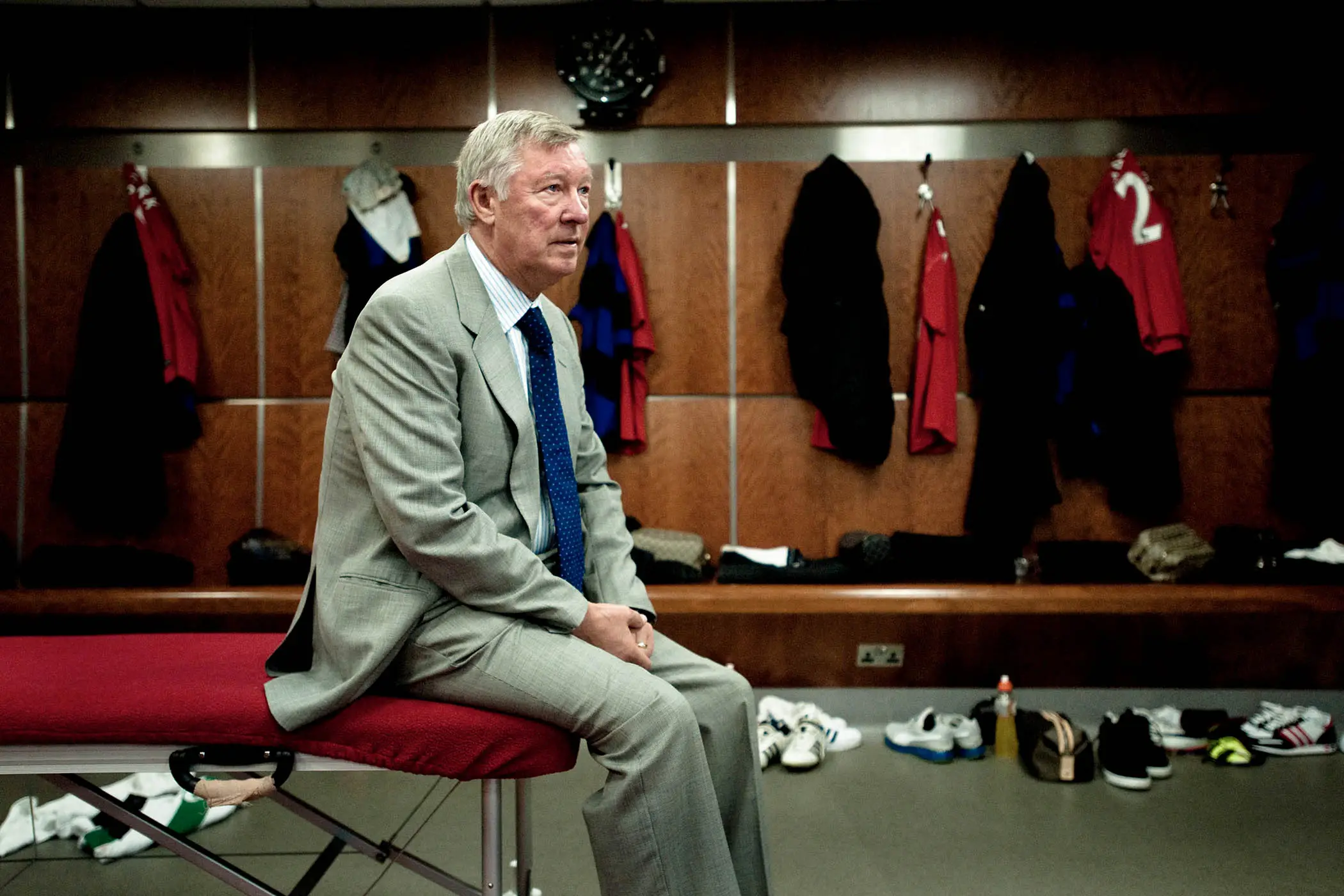
The former Manchester United manager’s new memoir is a life story in 21 matches. In a rare and wide-ranging interview, he explains why his love of family, his heritage of hard graft and a gift for managing young players were key to his success
The first thing Alex Ferguson does in his study after saying hello is point to a new item in his extensive collection of books on the assassination of John F Kennedy: The Devil’s Chessboard by David Talbot. Ferguson dives straight into a subject that’s captivated him since he heard about the shooting 63 years ago as a young footballer.
On the former Manchester United manager’s bookshelves there is a gilded leather copy of the Warren commission report into the fatal shooting in Dallas in November 1963. Talbot’s book, which rests on his desk, sends Ferguson into fresh hypothesising about who did it. He has his theories.
He remembers being in the bathroom shaving for a Friday night of dancing when his father called out: “Is that right that John Kennedy has been shot?” His son called back: “Dad, you’re deaf – you’re imagining it.” In his own new book, Games of My Life, Ferguson recalls the minute’s silence for Kennedy later at the dance and writes: “JFK’s death seemed to cast a darker pall over everything happening in my life – the handsome, decorated war veteran, shot at the age of 46.”
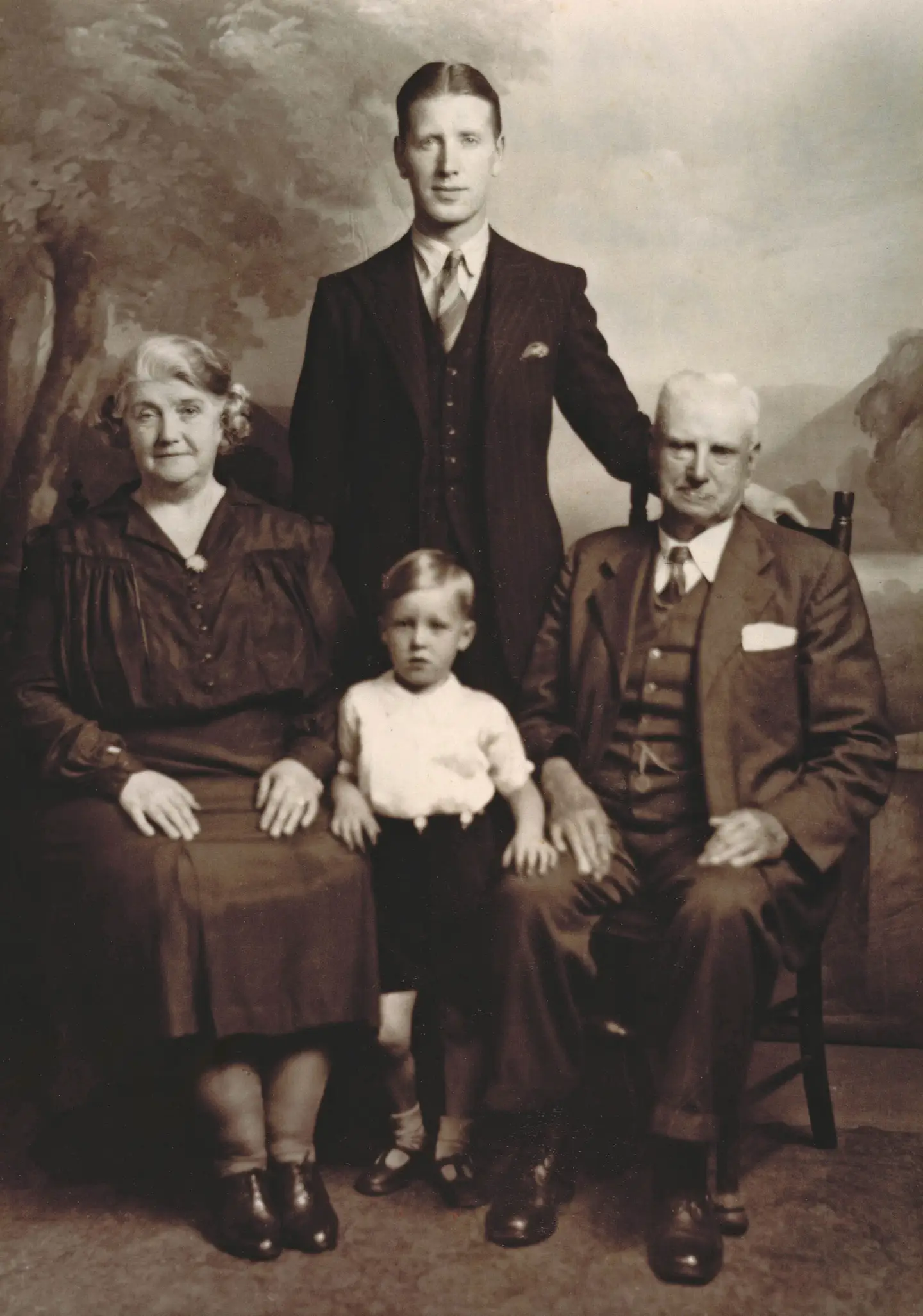
Since retiring from his role at United in 2013 with 13 Premier League titles, two Champions League victories and five FA Cups, Ferguson, 84, has become something of an archivist of his own past. To the autobiography he wrote in 1999, Managing My Life, he added a second volume, My Autobiography, then a book about management called Leading. A documentary, Sir Alex Ferguson: Never Give In, traced the story from his days as a firebrand trade unionist to the brain haemorrhage in May 2018 that nearly killed him. The new book, which stretches his literary output to a quartet, is a 21-match rumination on a youth spent in the shipyards of Glasgow, playing and managing in Scotland and the glories of his 27-year reign at United. He says all these projects have been important to help him stay mentally active.
My own relationship with him started in the 1990s with a couple of big newspaper interviews. For a football writer, a one-on-one with “Fergie” was the golden “get”, and daunting, because he expected high standards from interviewers. Those pieces probably helped to generate the offer, as a long-term project, to co-write that second autobiography in 2013. At every step in the writing process, he was intensely committed to reaching the highest possible level of memoir. To listen to him describe his work for hours on end felt like a revelation.
Together again now, we admire his collection of books by the peerless biographer Robert Caro, and in particular, Working, a bible of reportage with a title that might sum up Ferguson’s own devotion to hard graft.
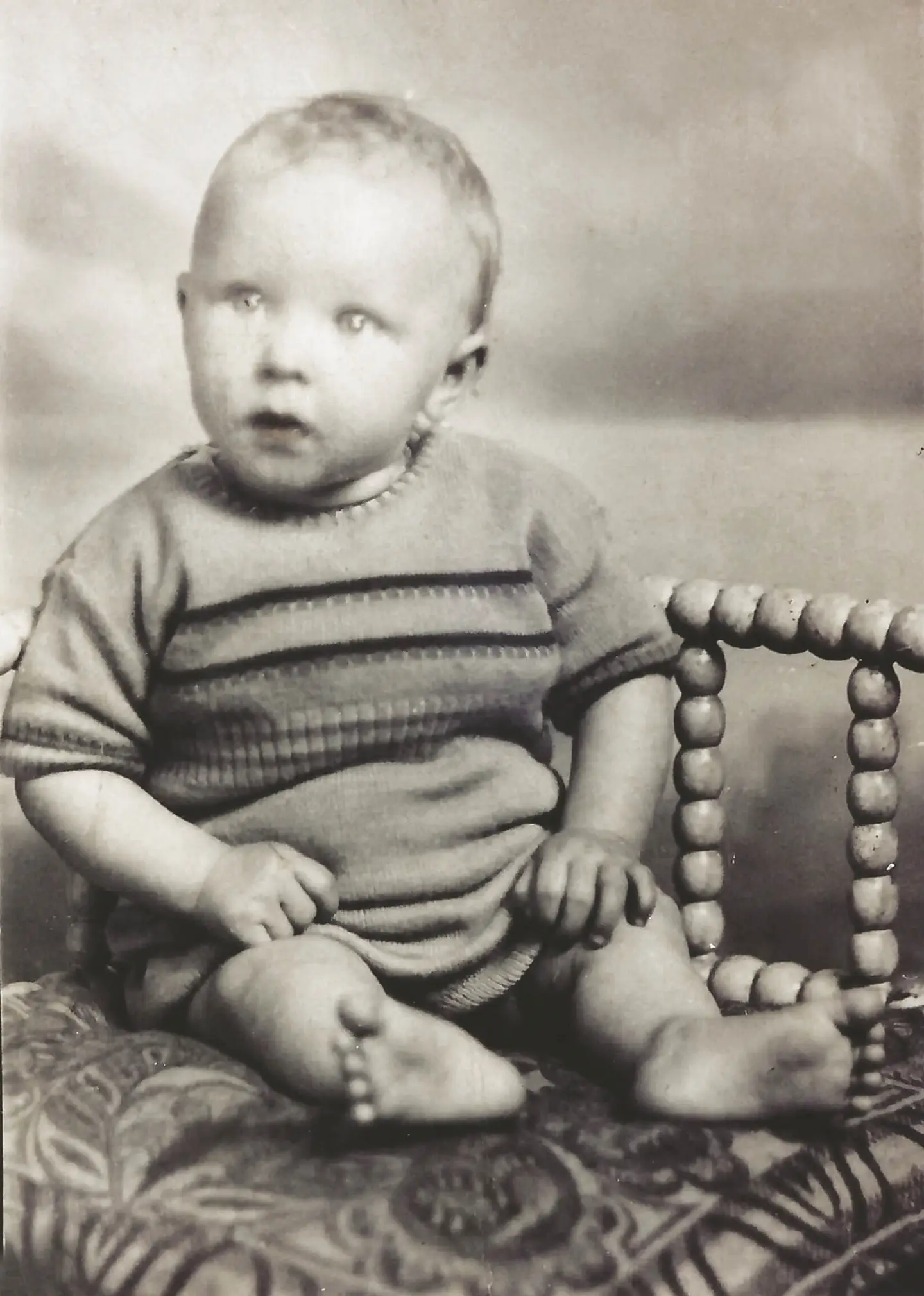
Games of My Life reflects this. It isn’t a collection of greatest hits: more an arc of character formation, spanning 69 years of matches. He reckons he played or managed in more than 2,800 official fixtures, plus another 300 exhibition matches, in 61 countries.
The 21 chosen games flow from the park pitches of Scotland to his two seasons playing for Rangers, and on to a stellar management career with Aberdeen and United. “I could easily have done it just with games for Man Utd,” he says. “But Jason [his son] reminded me about all the games I’d played for Glasgow schools, Drumchapel Amateurs and so on.”
There’s no place, therefore, for the mad night in Barcelona in 1999, when United completed the hallowed treble of Premier League, FA Cup, and Champions League, where they scored two goals in injury time against Bayern Munich in a game that felt like a heartbreak in slow motion until a miracle intervened.
“It’s been well recorded – you see it every minute of your life,” Ferguson says, explaining the omission. “Although it was probably the most important game for me because I’d never won a European Cup. It would have been a shame going through my career not having done that. Getting the holy grail was always in the back of my mind. [But] the games that really spring to mind are to do with people, more than the games.”
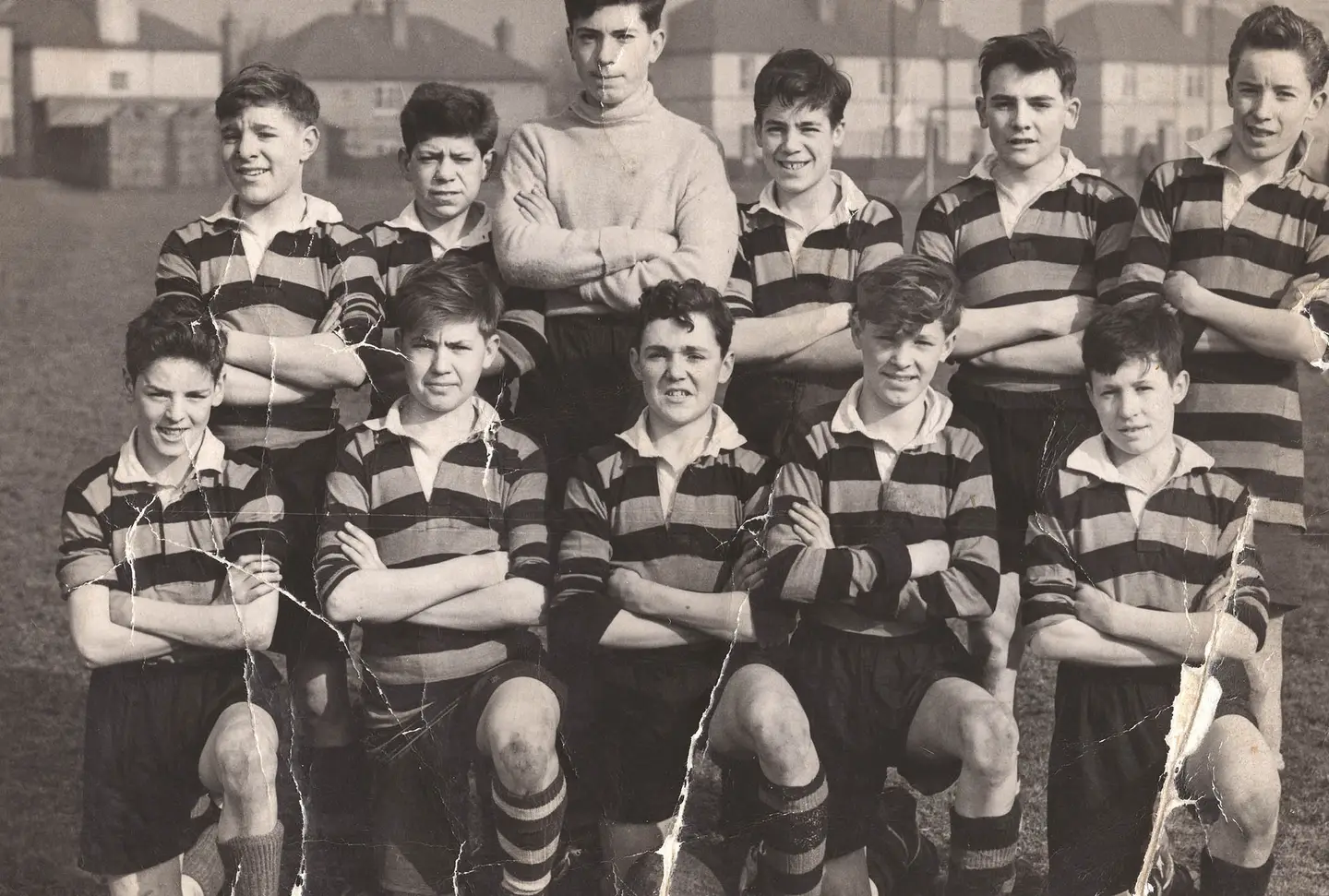
Among many poignant chapters is the final one. A glass case opposite his armchair contains a solitary Scotland cap. Ferguson points at it and tells the story of how the Scottish Football Association (SFA) made him wait 54 years before letting him have one. Nobody in football had ever defied Ferguson for that long.
In the summer of 1967, he was part of a summer tour by the Scotland team and played four matches against countries – Israel, and Australia three times – plus three against invitational sides. He scored nine times on the trip. The SFA, however, called it a B-team tour because club commitments had forced so many players to withdraw. That ruling gnawed at him for more than half a century.
Ferguson is a deeply proud Scot who still takes the Sunday Post, named his first house in Manchester “Fairfields” after the Govan shipyard where his father worked, and brings tattie scones (potato cakes) back home to Cheshire on every trip to Glasgow. He was never going to accept the authorities denying him his place on Scotland’s honours board alongside Kenny Dalglish, Denis Law and Graeme Souness.
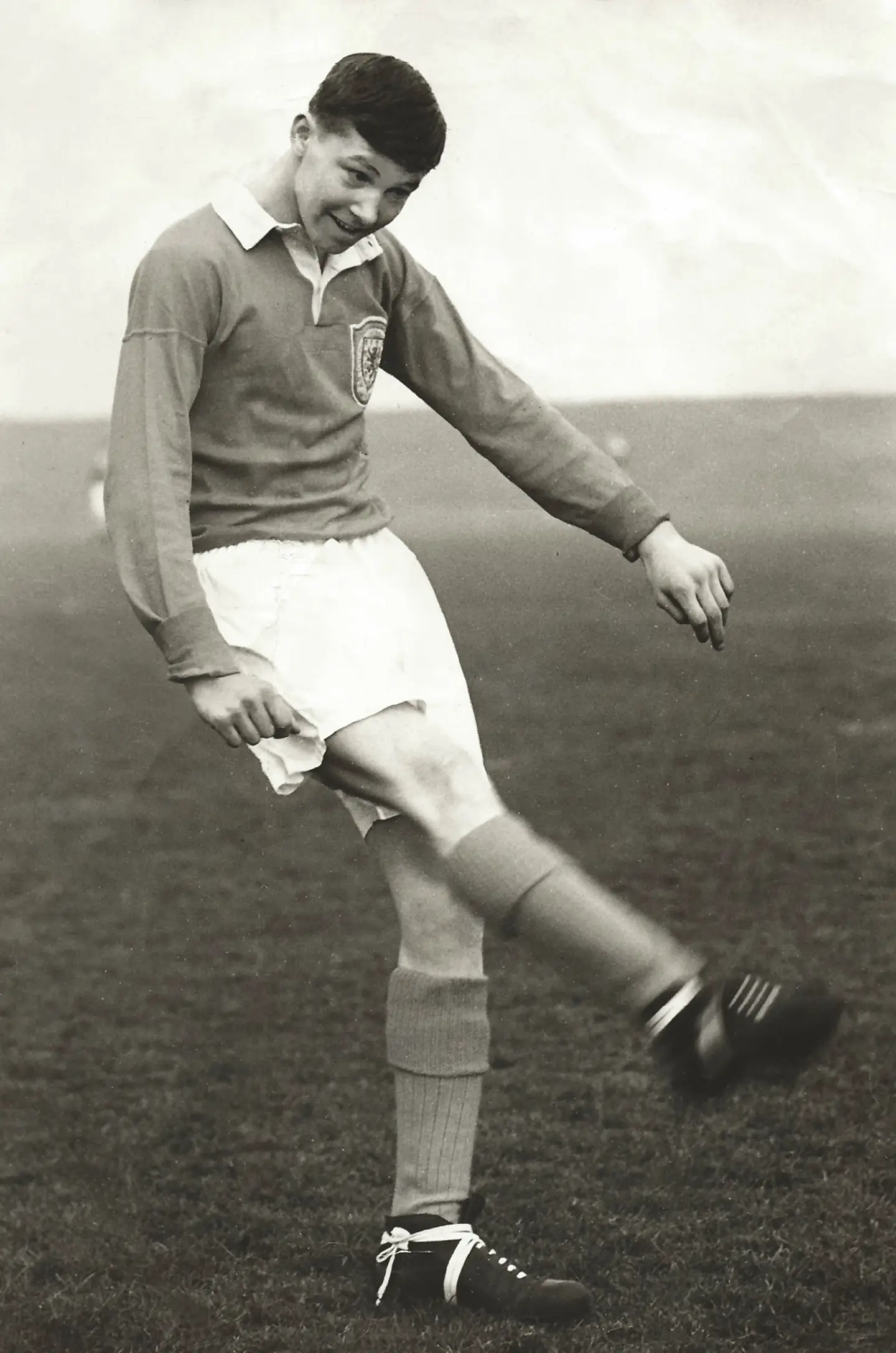
Still staring at the cap in the cabinet, he says: “I wrote a nice letter to the SFA and said: ‘This is not a vanity thing – this is a plea for you to understand what it is to play for your country.’ So the SFA decided to give me a cap, along with three other players. The cap says ‘summer tour’. Nonetheless, I got a cap.” He says now that the award “put a bow on my entire life”.
Ferguson knows he can count himself lucky to have been around to fill that gap in his memorabilia collection. One May morning eight years ago he climbed out of bed with “a savage headache” and “collapsed against a shoe rack”. Wearing her new hearing aid, his late wife, Cathy, heard the crash and summoned Jason, who lived nearby. Ferguson woke in Salford Royal hospital after an operation to relieve bleeding on his brain. The first question he asked when he regained consciousness was how the team his son Darren was managing, Doncaster Rovers, had fared against Wigan Athletic. Ferguson was among five patients operated on for brain haemorrhages at the hospital that day; only two survived.
In the days that followed, he lost the power of speech and scribbled notes to himself to reboot his memory. He was terrified by the loss of a voice that everyone who played for him has since had embedded in the soundtrack of his life. But, by late September, four months after the brain haemorrhage, he was back at Old Trafford to see United draw with Wolverhampton Wanderers – one of the games in the book. Cathy, who rarely went to matches, was beside him. “I might have managed Manchester United,” he says now, “but Cathy was the one who managed Ferguson United.”
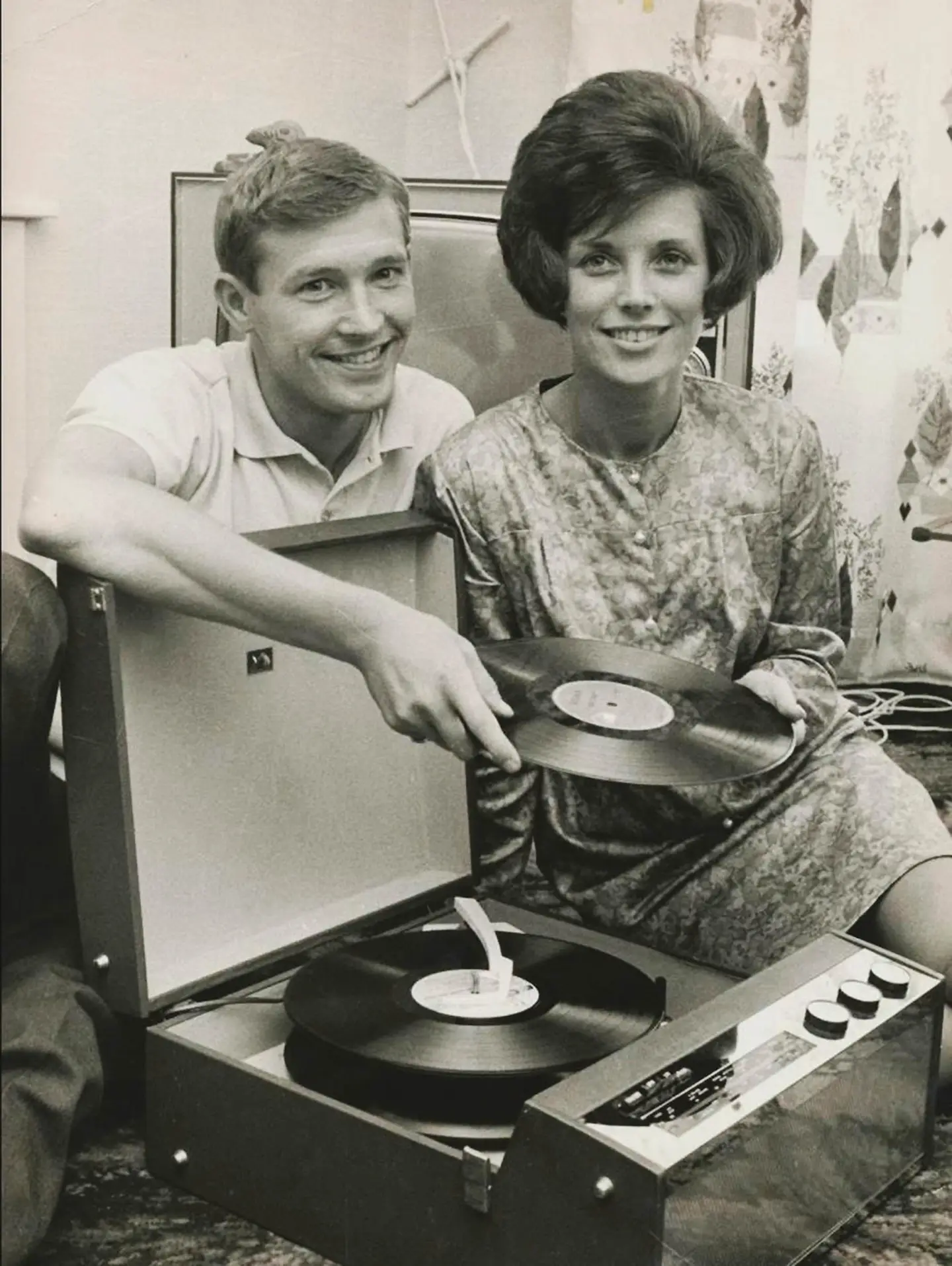
She died in 2023. Her absence now from his life after their 59 years together casts a shadow of pain across the house: “Fifty-nine years is a long time,” he says. “There was a huge religious part of Cathy, and she always regarded herself as a wife and mother. She never involved herself in my life as a manager. Never complained about it, because she knew it was my job. A fantastic wife, and for the boys – brilliant.
“She was a great judge of people. Very careful with people who wanted to be friendly with me. She never made it here [to his current house]. We got married on the Saturday morning and I played in the afternoon.”
Ferguson the raconteur is never subdued for long. Almost his defining characteristic is the urge to tell funny stories and laugh. Thinking back, he remembers meeting Cathy’s mother and her asking: “Do you drink, mister?” Ferguson is roaring now as he recalls shouting back: “My name’s Alec!”
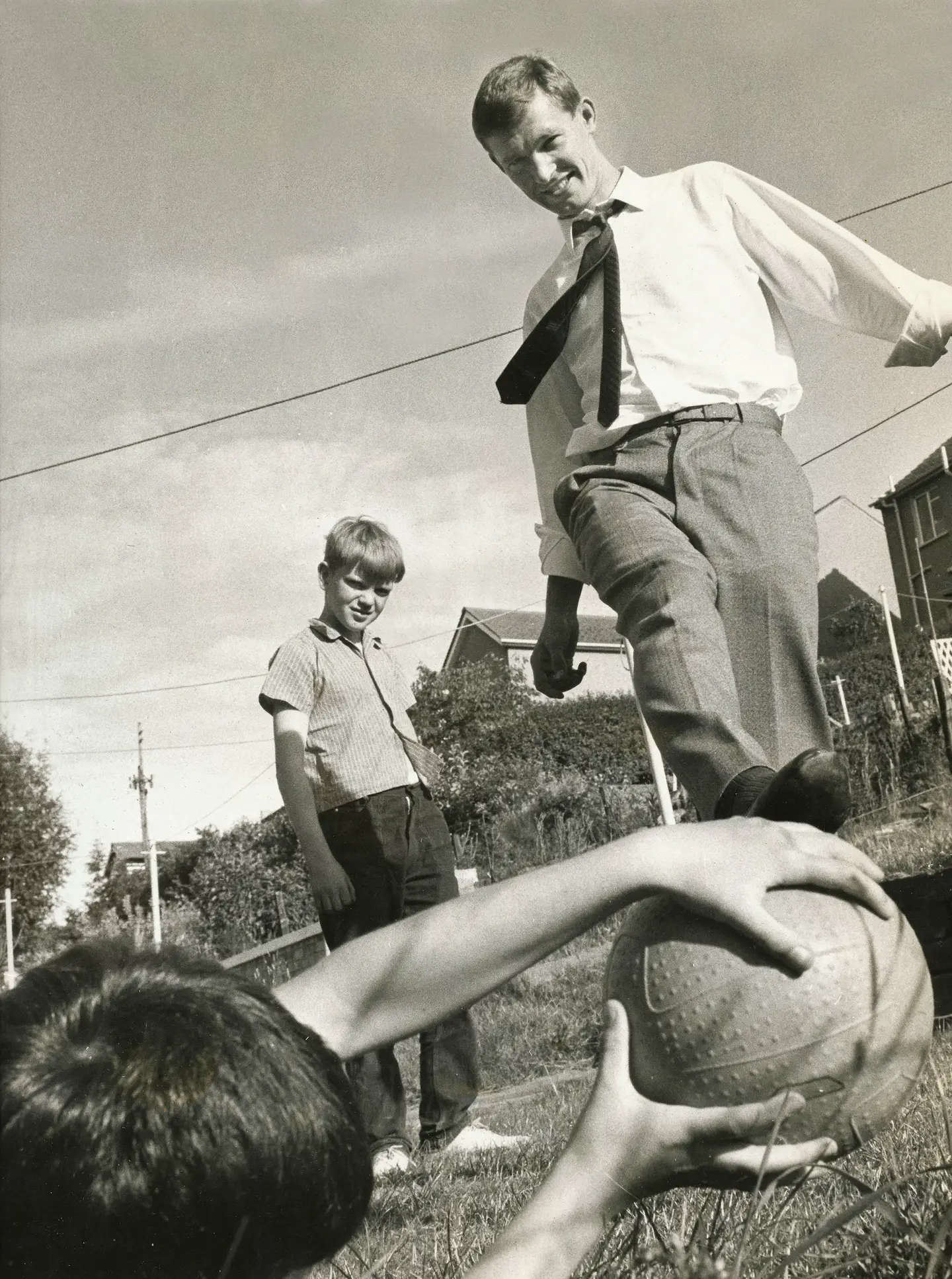
In a tenement block in Govan, Ferguson’s parents “slept in a recessed bed in the kitchen” because one of the two bedrooms had been rented out to an Irish family. Ferguson and his brother, Martin, slept in the other. “That flat was the making of me, the place where I developed my inner confidence and my drive to succeed,” he writes.
On the certificate confirming he’d passed his apprenticeship as a toolmaker, the skills listed might apply equally to his talent for honing players: “milling, shaping, slotting, turning and all forms of grinding”.
The Fergusons were what George Orwell might have characterised as proud working class: smart, trade unionised and football-obsessed. Ferguson first saw United play in May 1953, when they came to Hampden Park to face Rangers in the Coronation Cup. Three decades later, he was to become the new Matt Busby: as much patriarch and overlord as mere head coach of United.
Float the theory to him that to be a truly great football manager you need an aura, charisma, force of character, and his eyes glow in recognition. “Absolutely. Stein. Big Jock. I enjoyed my time with him. That aura. Shanks [Bill Shankly, manager of Liverpool from 1959-74] had the aura too. You wanted to be like them.”
JFK aside, his book collection leans to the great man of history school of politics. He was fascinated too by Hitler and Stalin, but not because, as some might think, he modelled his management style on tyrants.
“Do people really think I could have won all those trophies just by shouting at people?” he once asked me, when we worked on his memoir.
My theory was that he was, above all, a professor of human nature, a skilled reader of people’s inner beings, especially young footballers. A successful manager is someone who persuades other people to do what they, the manager, wants – or needs – them to do, even if it’s not necessarily in their interests; who packages a sometimes gruelling daily commitment as a moral duty, to team, to club and as the only path to fulfilment.
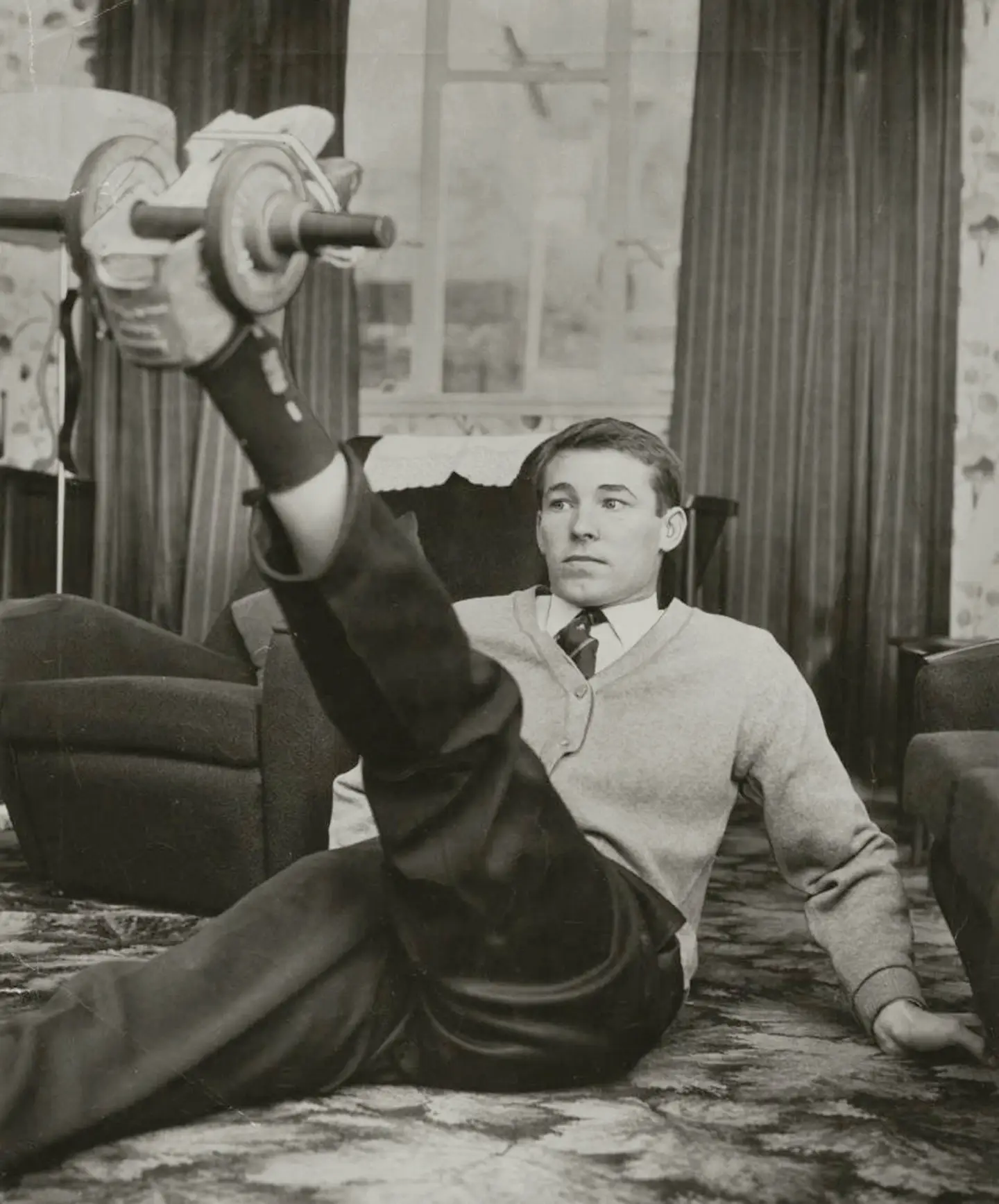
Ferguson doesn’t deny it now, and refers straight away to “my experience of being a shop steward in the engineering department [of typewriter manufacturer Remington Rand]. When we went on strike, I called the apprentices together. The strike was to give the apprentices better standards and salaries. Our salaries were fine. We were an American firm. But we had a duty to help the rest. Everybody out – that was the core message. Everyone was hitting their machines with hammers and mallets. It was exciting.”
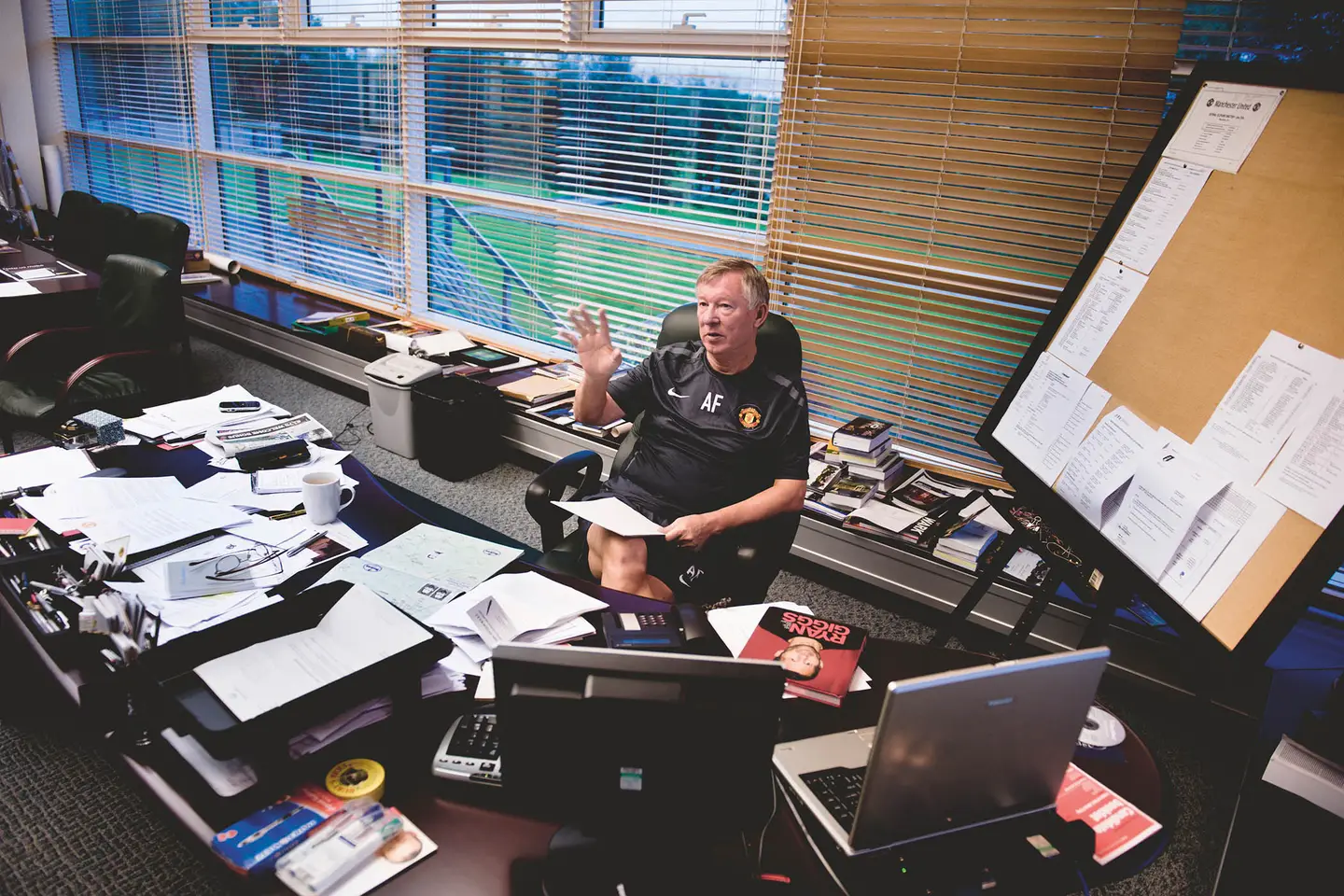
He adds: “I liked to get players in my office. I liked to talk to them. I did that sometimes with the younger ones. I would tell them a story or something. On my wall, I had a photograph of when they were building the Rockefeller Center, when the workers are sitting way up on the girder.
He would show that famous photo (Lunch atop a Skyscraper, 1932) to the apprentices and say: “See that? Not a bit of fear. And I’m asking you to go out there [on the pitch]. If I ever see you jumping out of a tackle, I’ll take you [up] to that [girder].
“The other thing I stuck to was – be consistent. I never changed in my beliefs, with young players, whether I was at St Mirren or Aberdeen or United. It was always there. I thought it was right. I thought it was good to produce young players. I produced dozens of players from the United academy who became internationals, which is pretty good.”
Standards were another motif. “Discipline. When I went in, they didn’t have blazers. I thought: ‘Man Utd!’ Right away, I got blazers. When you’re walking through an airport, people would think: ‘They’re Man United.’ If you go through in denims and leather jackets, nobody is going to notice that. The badge tells everybody.”
It was a managerial career that began in 1974 when he “rolled up to the doors of East Stirlingshire in my Ford estate” to work with a transfer budget of £2,000 and players on between £5 and £8 a week. He left behind a respectable career as a combative centre-forward in something of a golden age of Scottish strikers: hence, he says, his struggle to earn full Scotland caps.
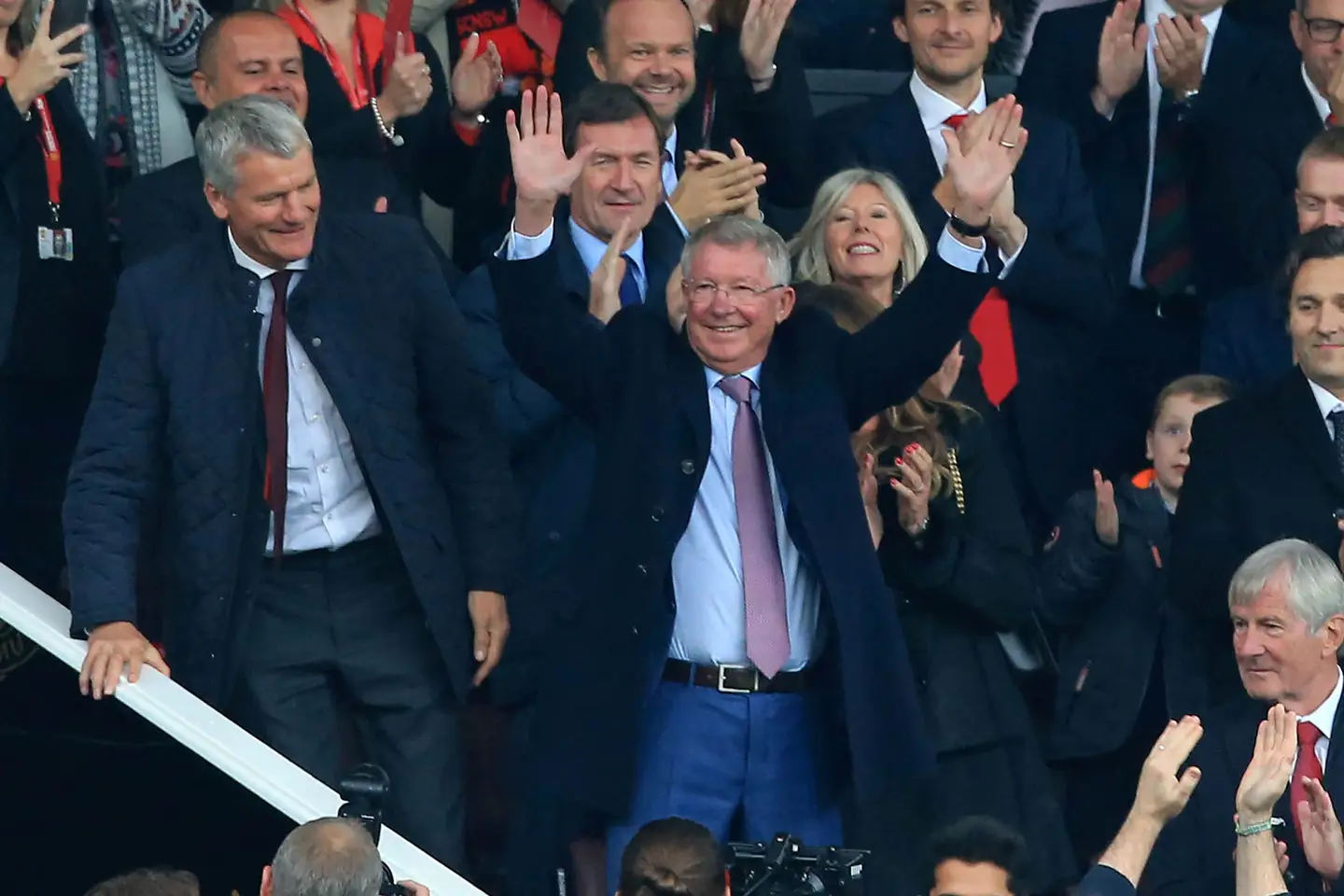
Those closest to him speak of adaptation as being one of his hallmarks, from trying to keep journeymen players out of the pub in Scottish football’s backwaters to exerting mastery over Cristiano Ronaldo, Eric Cantona, Wayne Rooney, David Beckham, Roy Keane, Ryan Giggs and countless others. His fallouts with Beckham and Keane were tests of his authority that ended with the two superstars expelled and the manager’s dominion intact. Keane once said to him, during one of their rows: “You’ve changed.” And Ferguson fired back: “You’re right, I’ve changed. I wouldn’t still be here if I hadn’t.”
In the age of directors of football, vast management structures and armies of data analysts, Ferguson’s reign can feel both an increasingly remote memory and one worth pining for. The certainties (and the trophies) of his time in charge of United evoke the sense that something irrecoverable has been lost; that Premier League football is now entirely transactional and lacks the spiritual grandeur brought to the game by Jock Stein, Bill Shankly, Busby, Arsène Wenger and Ferguson: benevolent dictators.
In the book he writes: “If I were a manager nowadays, I would still want to have ultimate control over everything to do with the football operations – everything. If the manager is the man held responsible for the results, then he deserves the authority.”
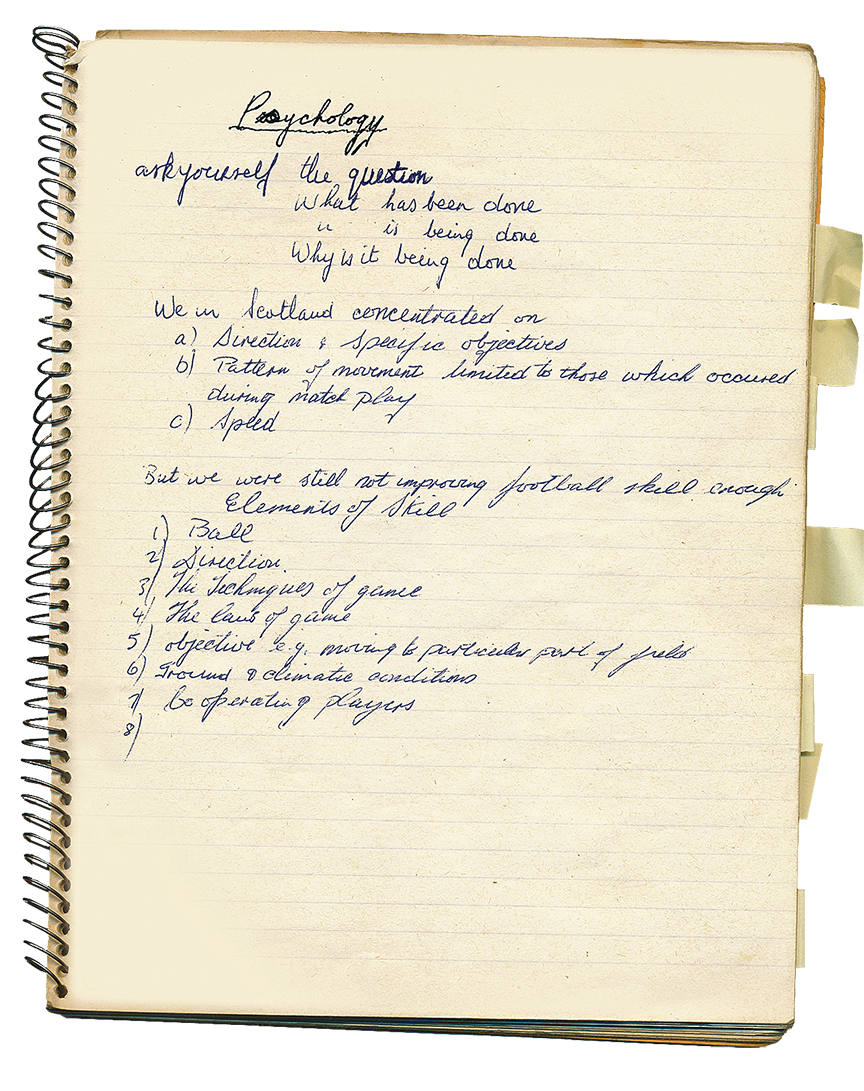
The notes preserved in the book are also intriguing. He says: “I had pads and pads. I was making notes all the time. Mainly about activity at the club, players who’d been in to see me – and on games. You can do management a lot of ways. When I was at Rangers I never saw the manager, Scot Symon, with a tracksuit on, ever. He wore a bowler hat and waistcoat – immaculately dressed.”
United’s churn of managers since he retired (there have been 11 in 13 years) is off-limits in interviews; to avoid the back-page news cycle and show respect to whichever United manager is trying to turn things round. His own troubled start at Old Trafford was immortalised in 1989 by a message painted on a bedsheet: “3 YEARS OF EXCUSES AND IT’S STILL CRAP… TA RA FERGIE.”
But he does say: “The great thing about supporting United is that you have those highs when they turn it on and win a big game. It’s always an exciting way that they do it. There’s no kick it up the park and win a free kick. The way I look at it is – I still enjoy going because the support is always there.
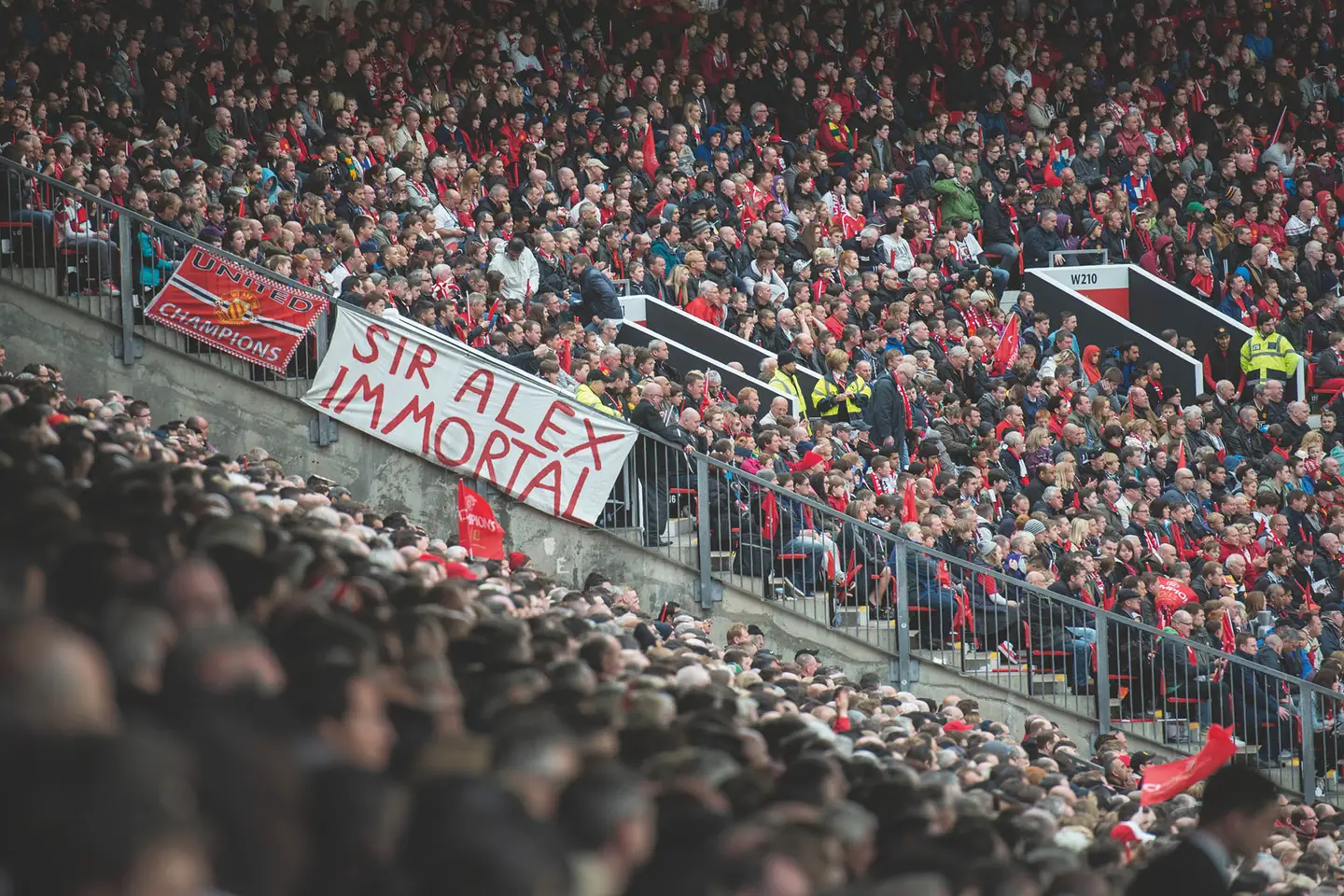
“I’m saying to myself: ‘75,000, every week.’ There can’t be a more loyal fanbase than that. People say it’s going back to the Munich air disaster [and afterwards]. I still hang on to that a bit, because there were always these great players around in my time. Denis Law used to come into training. Nobby Stiles was a youth coach with me for a while. And Bobby Charlton …[an] absolutely magnificent man.”
If his study has the feel of a retired academic’s lair, with books spread around, he admits to reading less now, as many would in their 80s. To his old interests in wine, racehorses and the JFK assassination, he has added support for dementia charities. He bought a house in Glasgow to be closer to his brother Martin, who has the condition, and to “make sure Cathy’s memorial is being looked after and is in good shape”.
A dinner in London hosted by Jackie Stewart for his Race Against Dementia charity stirred Ferguson’s concerns around an illness that has afflicted hundreds of ex-footballers. “I worried about that myself because I headed the ball a lot,” he says. “All footballers did. Dementia’s a challenge for anyone getting older. You worry about it a lot. I always say to myself: ‘I’m 84 [laughing]. If I get to 85, I’ll be all right.’” To comfort himself, he thinks of Jake LaMotta, the boxer portrayed in Martin Scorsese’s Raging Bull, having 106 fights but still living to 95.

“He recognises me, which is great,” Ferguson says of Martin. “In Glasgow, they started a music thing [Playlist for Life, a music and dementia charity], and the idea is that you give them a box with all your favourite songs in it. They can just press a button to play them, and it brings all the memories back.” He donated £100,000 and submitted a playlist with songs by Frank Sinatra, Nat King Cole, Elvis Presley, the Beatles and Dusty Springfield. And he added a song that “reminds me of the lap of honour at Old Trafford when Manchester United won the Premier League for the first time in 1993”. It was bound to be Queen’s We Are the Champions.
With a foot in a medical boot from an achilles injury, Ferguson is currently on light duties, managing his energy. But as I leave, he’s laughing as he accompanies me to the front door, saying: “I’m still alive, anyway.” He was always fiercely and inexhaustibly alive.
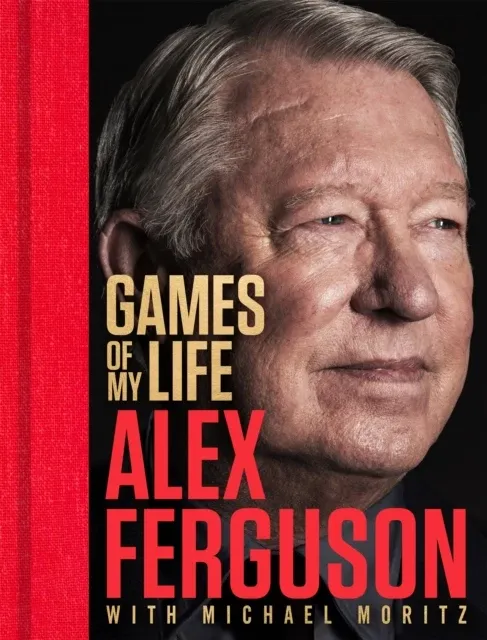
Buy the book
Games of My Life by Alex Ferguson with Michael Moritz is published by Pan Macmillan on 8 October (£40). Subscribers receive a 20% discount off RRP when ordering from The Observer Shop.
Buy book
Photographs by © Sir Alex Ferguson personal archive, from the book Games of my Life by Alex Ferguson - courtesy of Pan Macmillan publishers, Sean Pollock, Getty Images & Alamy. , AFP via Getty Images