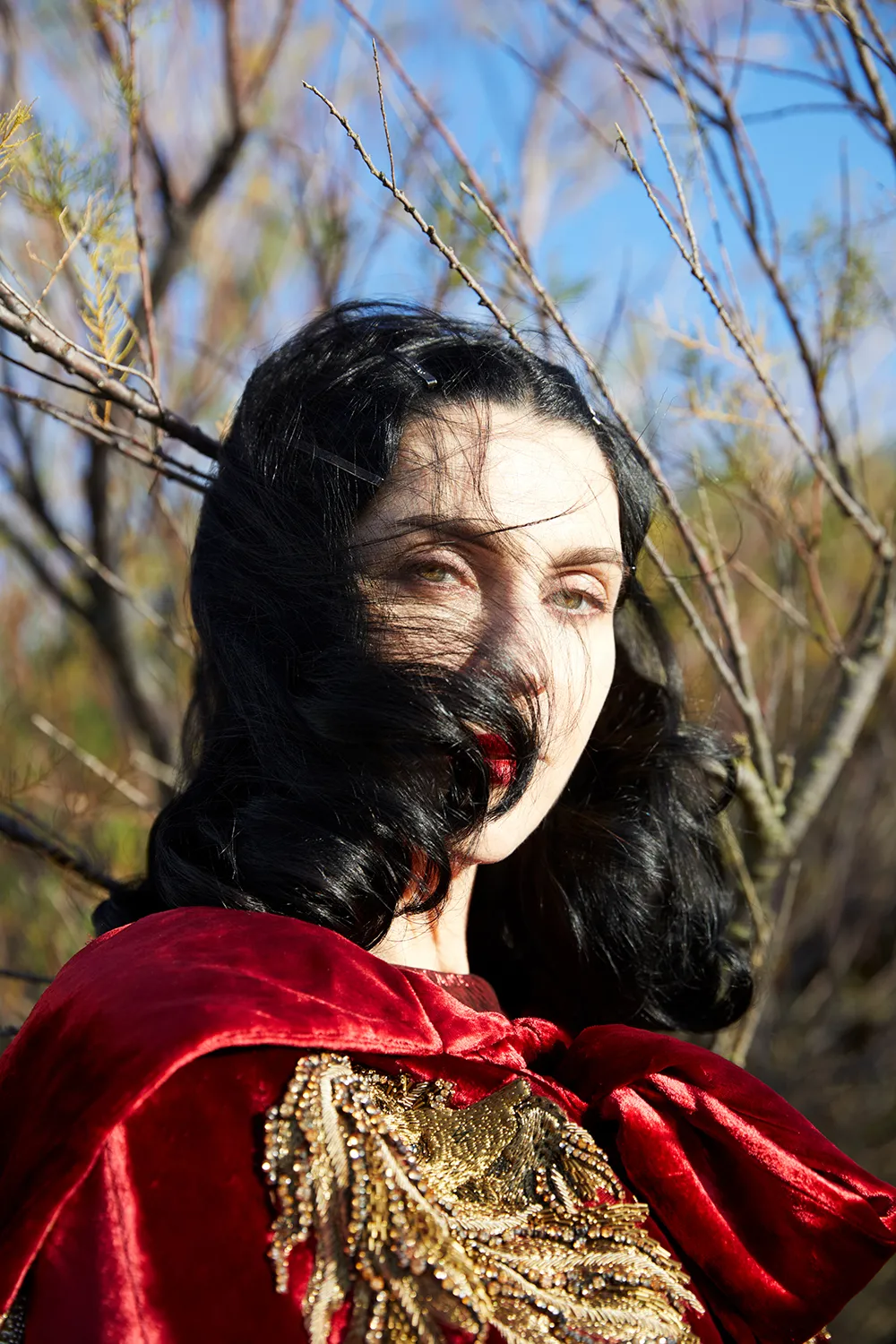

The many worlds of Susie Cave – model, designer, wife, mother – are captured in a hauntingly poignant new book of photographs by her longtime friend and creative collaborator Dominique Issermann
Susie Cave was 22 when she met the French fashion photographer Dominique Issermann on a modelling assignment in New York. It was 1988. “She was this tiny, beautiful, feminine woman with extraordinary strength of character,” Cave recalls. “I’d never encountered anyone like her before and almost immediately there was this connection between us, even though she was in her 40s.”
Cave was known then by her family name, Susie Bick. She’s since worked closely with other acclaimed photographers, notably David Bailey and Nick Knight. But that initial connection with Issermann was the beginning of a friendship that has lasted nearly 40 years.
“No other relationship I’ve ever had is anything like it,” Cave says. “Dominique has been there for me at times in my life when I was almost unreachable – by anybody; when I had some major relationship catastrophes. For a time, I even had a room in her apartment in Paris. Mostly, though, we had happy times together. She kept booking me and we worked so much with her small team, who were like a kind of family.”
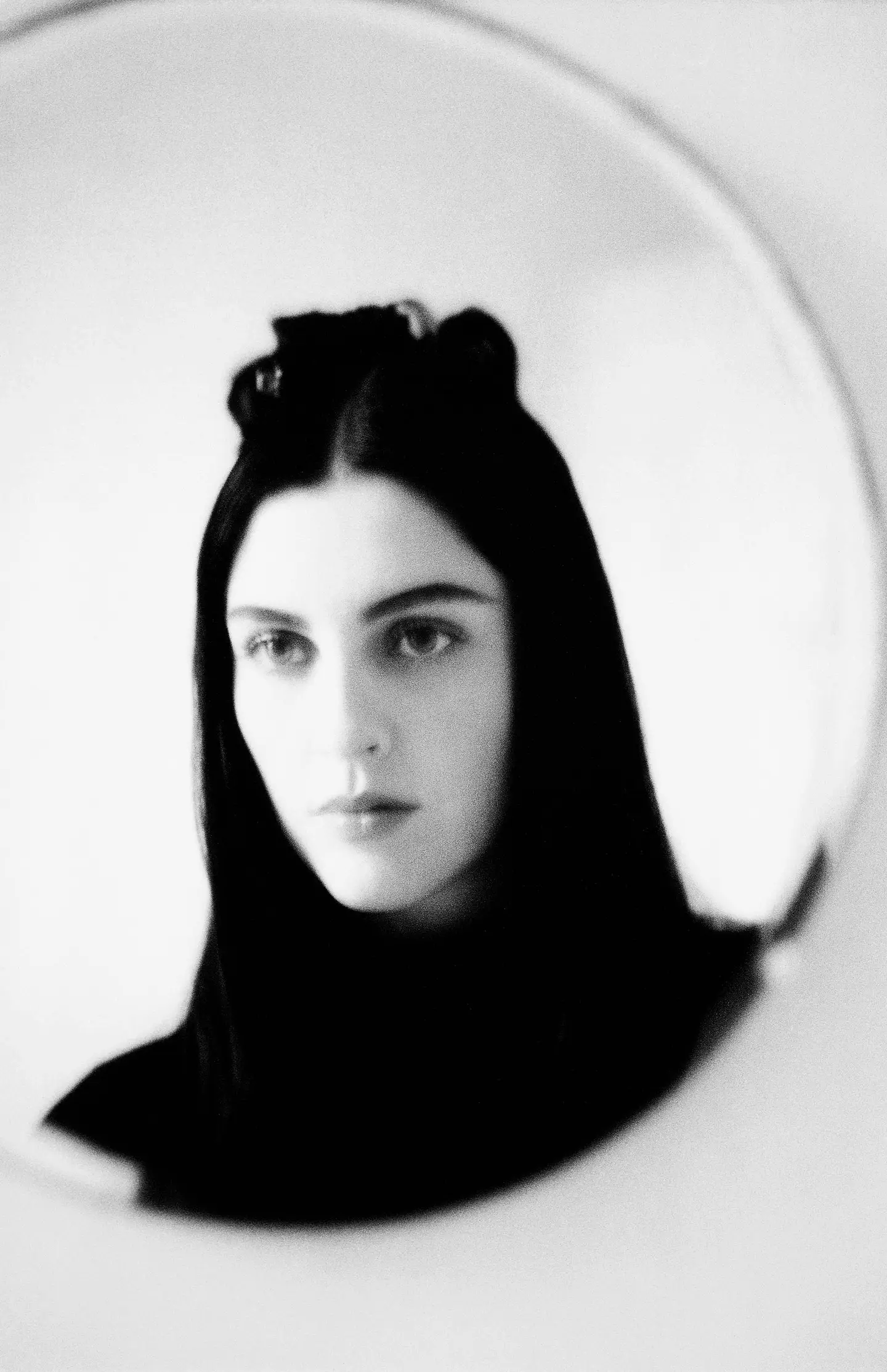
Issermann is an enigmatic figure in fashion photography. She began as a portraitist in her teenage years, shooting Isabelle Adjani, Catherine Deneuve and Jane Birkin. She has lived a fiercely independent and truly bohemian life; for a time in the 1980s, she was romantically involved with Leonard Cohen. On the liner notes to his 1988 album, I’m Your Man, he wrote, “All these songs are for you, D.I.”
When I asked Issermann to recall her first meeting with Cave, she replied by email, “The first time I saw Susie was at my studio. A friend of mine, a photographer, Stéphane Sednaoui, said I needed to see her. He was right; she was astonishing. She acted like Wendy in Peter Pan, living in a parallel world. She seemed to be free of judgment, even of herself. I told her, ‘You’re booked for a year – and more.’”
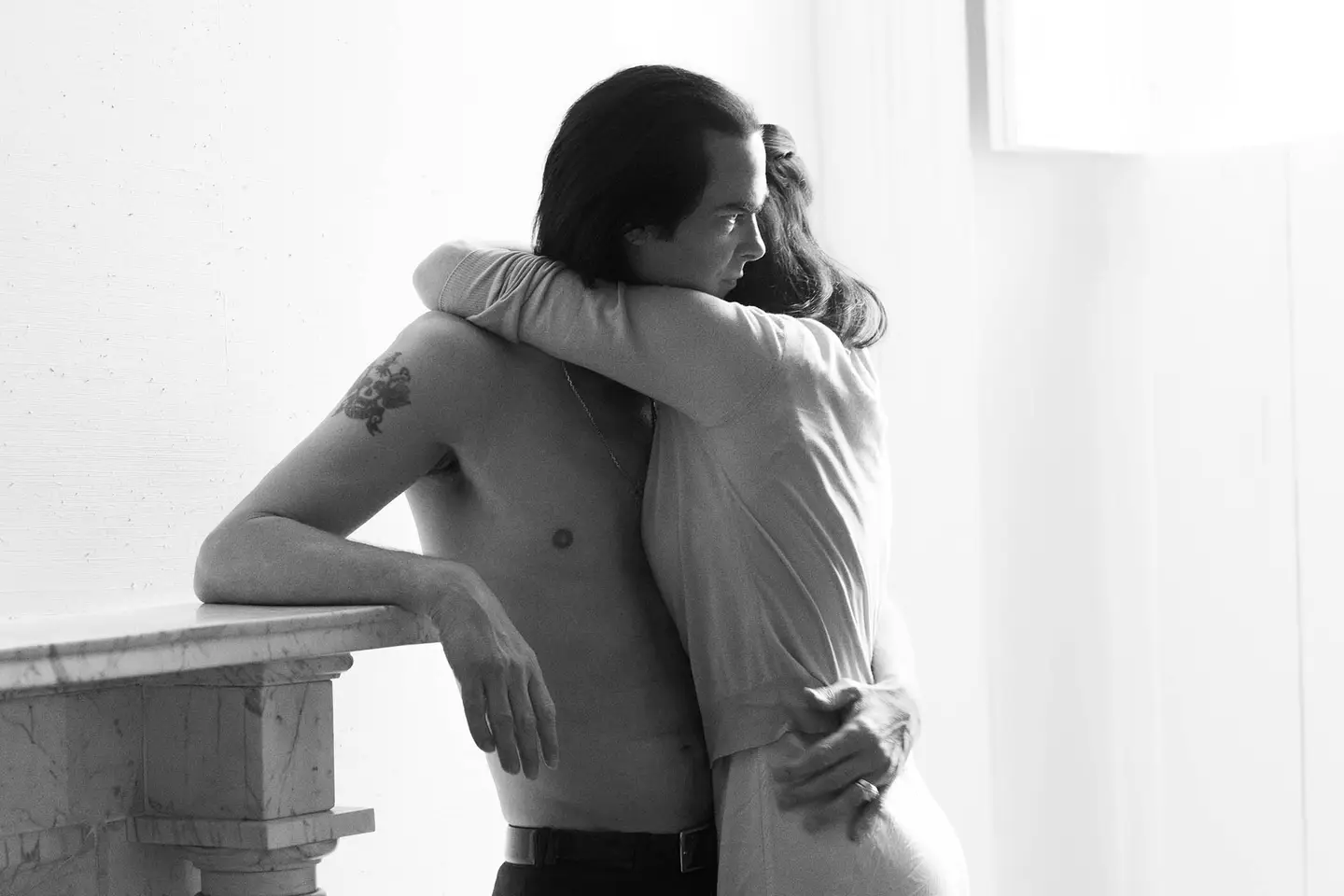
The depth of their friendship is at the core of a new book of photographs by Issermann, simply titled Susie. In stark, atmospheric monochrome, it traces the pair’s long creative collaboration in a selection of fashion portraits that range from the playful to the formally austere.
‘Susie acted like Wendy in Peter Pan, living in a parallel world. She seemed to be free of judgment, even of herself’
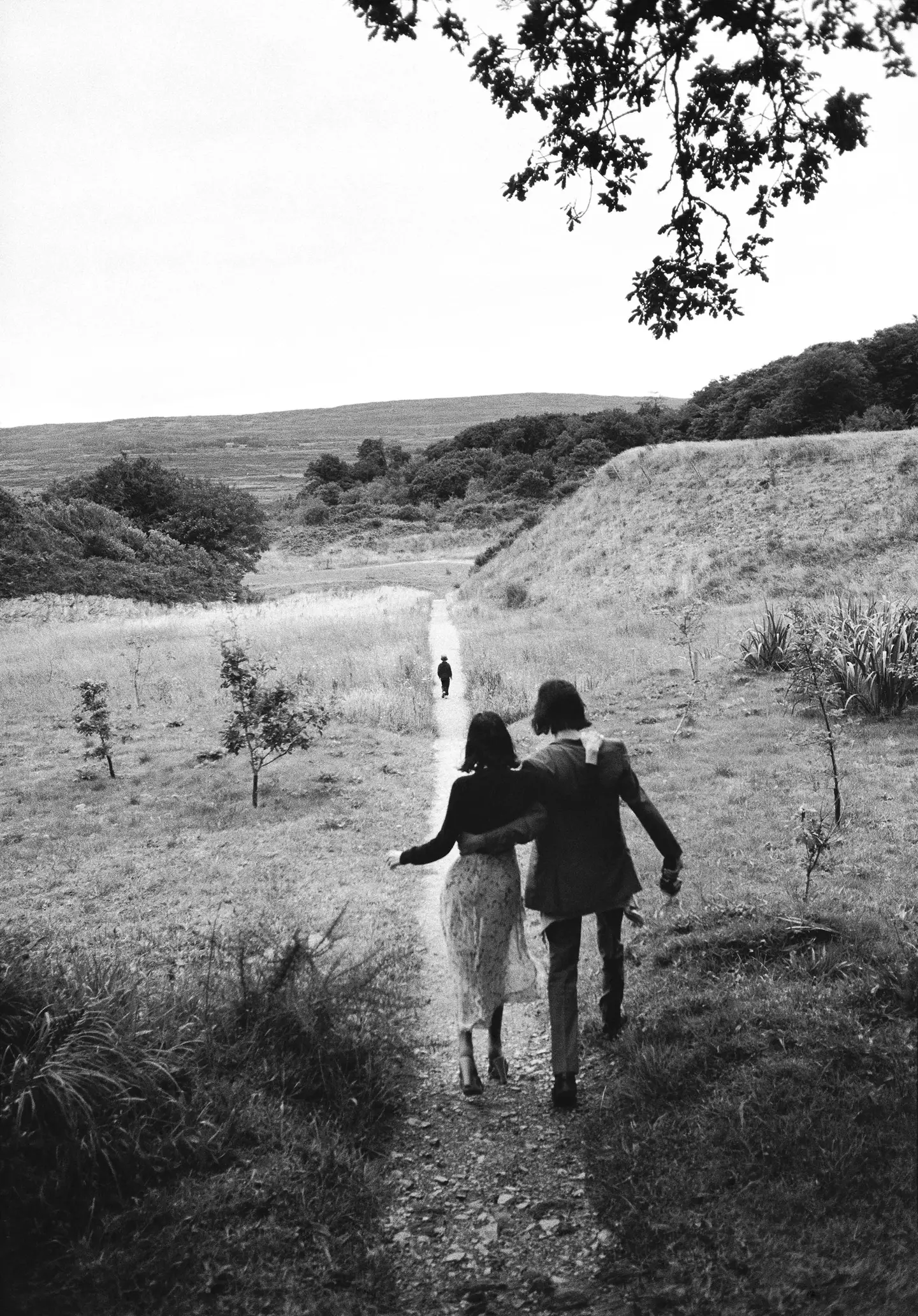
The visual narrative then shifts to a series of intimate observational shots of the Cave family: Susie, Nick and their twin sons, Arthur and Earl, on holidays, on walks together, lounging around the pool. “The twins were ever-present,” Nick writes, in one of many short reflections by Susie and him that punctuate the book. “Running and laughing, forever in motion – whirling gyroscopes tracing patterns through those joyful summer days.”
What begins as a kind of fashion diary becomes a much more intimate and revealing glimpse of what was and what has been lost. In 2015, Arthur fell from a cliff at Ovingdean Gap, near the family’s home in Brighton. He was 15.
It must have been difficult, I say to Susie, to delve into this store of incredibly poignant images that are now freighted with sadness and loss. She nods. “The personal photos with Nick and Earl and Arthur are the ones I love so much,” she says, quietly. “I remember David Bailey telling me that real photographers have their camera around their neck the whole time. Dominique is like that. Her photographs are our memories, and we treasure them, because they’re just so perfect and beautiful.”
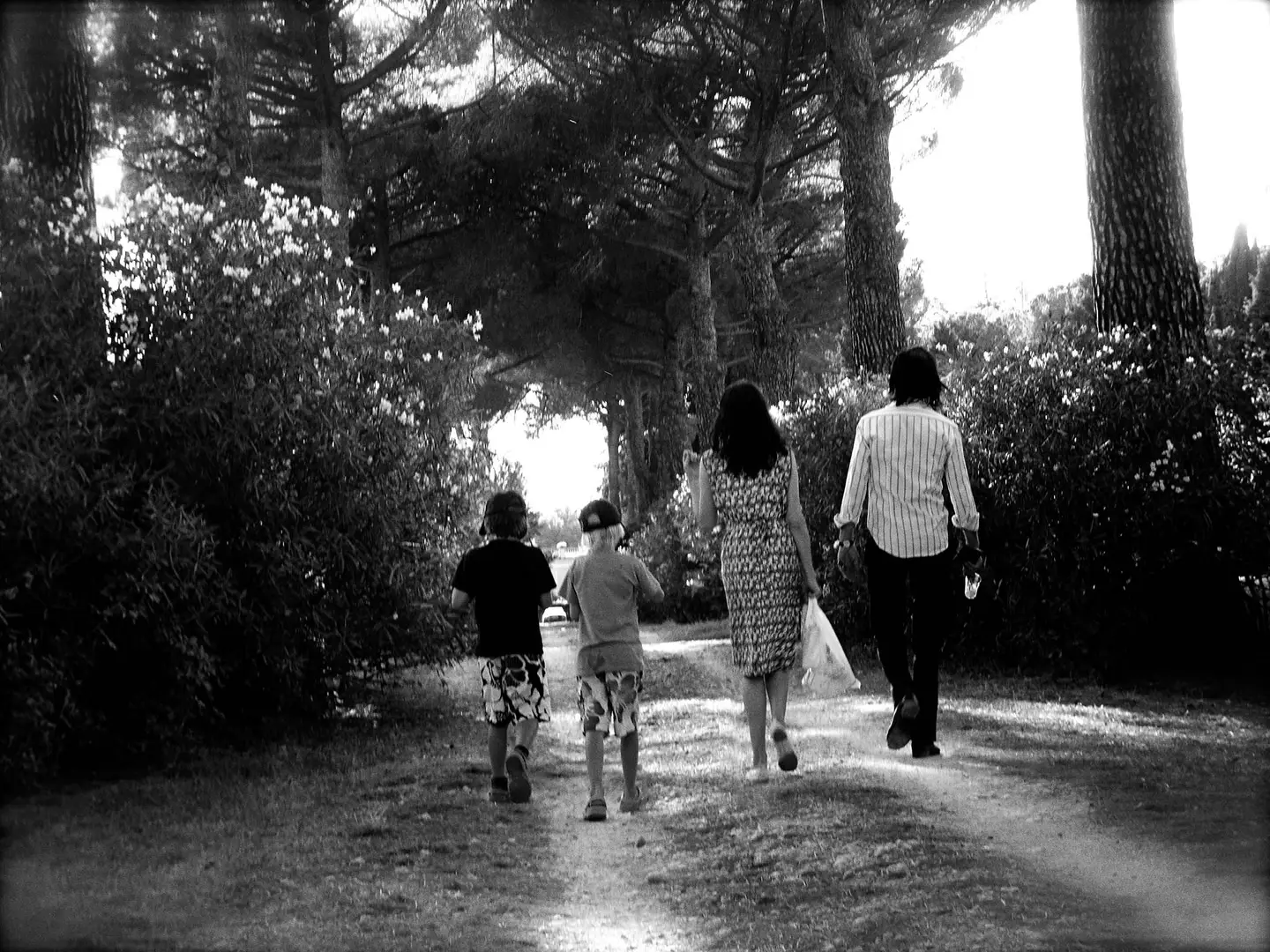
Did she have any reservations about sharing private family moments? “No, not at all. I was just so happy that we had these beautiful images of Arthur. And I just love them so much. In fact, I wanted many more in the book.” She pauses for a moment. “When we were first doing the book, I didn’t think it would land so much on the grief element, but that is the truth of our lives. It’s what happened.”
While her husband has found a new vocabulary to directly express his experience of loss and recovery – in song, in prose, and in the Red Hand Files, an online forum in which he answers questions from the public – she has remained more guarded, but her journey has also been transformative. Having given up modelling and raised her children, she launched her fashion label, the Vampire’s Wife, in 2014, but, in the immediate wake of Arthur’s death the following year, her grief was such that it started to make her ill: terrible migraines, episodes that lasted two or three days, sometimes every week. She remained in bed with the curtains drawn for several months, inconsolable, unreachable. But she found a tentative path out of the abyss by immersing herself in work. “To be engaged in the creative process keeps me alive,” she said in 2021. “It is a survival strategy.”
The fashion designer Bella Freud, Cave’s close friend, told me recently: “When she started her own label, Susie suddenly became a worker with this extraordinary sense of purpose. She was so incredibly committed and driven and it surprised a lot of people. That drive became something else entirely after Arthur’s death. As Nick has said, her grief became a kind of superpower.”
I ask Susie if, like her husband, she has found solace and direction in religion. “I’m very spiritual,” she says, “but I don’t go to church with Nick. I let him do that himself. To be honest I don’t enjoy it as much as he does. What intrigues me, though, is that he is so like my dad, who was very religious and went on pilgrimages everywhere. I took him to Sunday school when I was seven, and then he was hooked.”
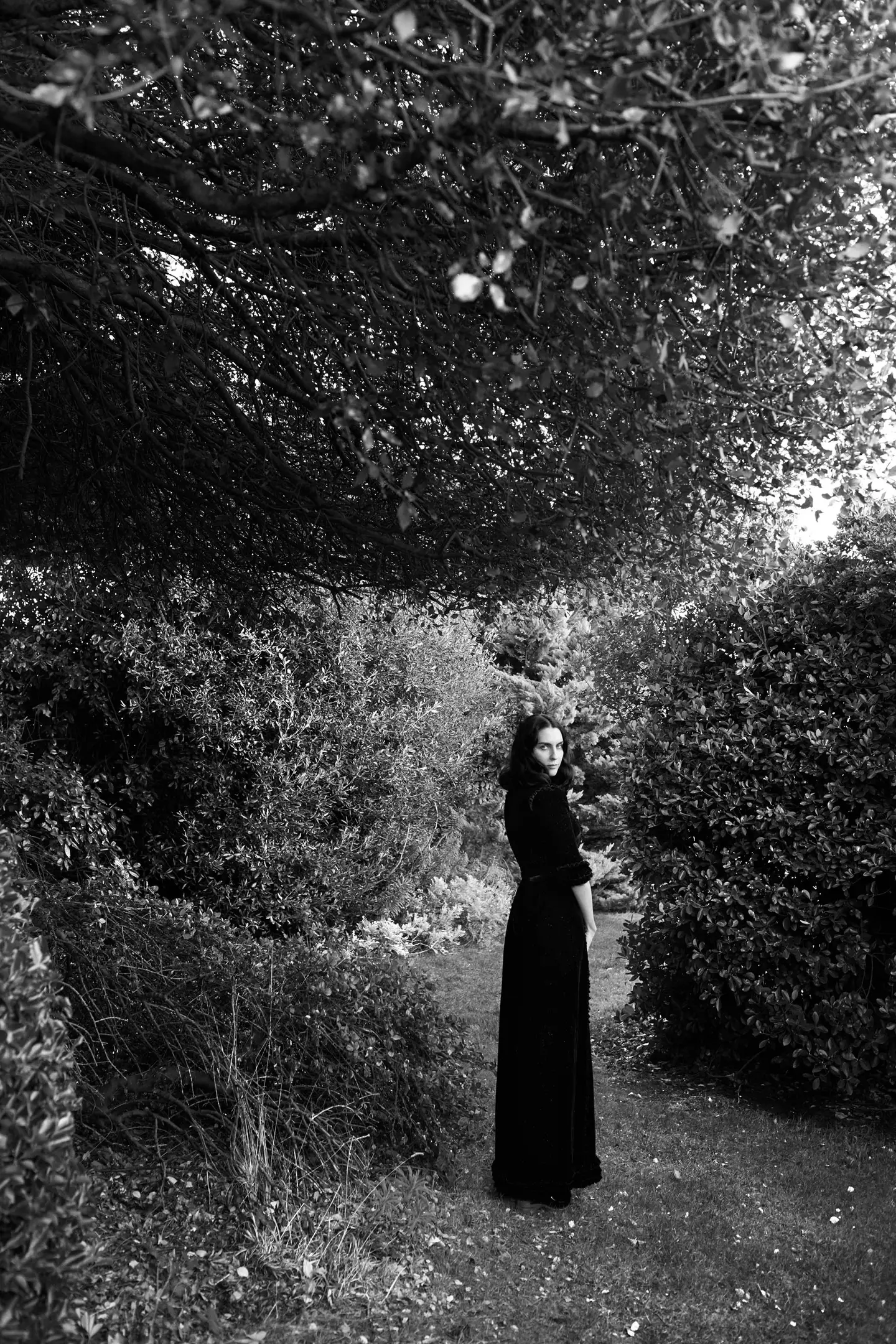
The Vampire’s Wife was a fashion success story. It attracted a devoted celebrity clientele that included Kate Moss, Keira Knightley, Florence Welch and Kate Middleton. In 2020, Vogue described one of the brand’s pieces as “the dress of the decade”. When I ask if it had been difficult to make the leap from model to designer, she says, “When I had the Vampire’s Wife, I had no qualms about fighting for every single thing to be the way I wanted. People who knew me were stunned, because I’m very passive and easygoing, but with my business I was like a maniac. I wasn’t about to give up my creative ideas, which is something I learned from watching how Dominique worked. She would constantly fight with editors who wanted to crop and change her photographs.”
The Vampire’s Wife ceased trading in May 2024, due to cashflow problems that followed the label’s rapid expansion. Was that a bruising experience? She nods. “It was tough. What was really tough was trying to protect the identity of the brand. It was growing so fast and I was trying not to let it grow so fast. In the end it just ran into itself. It couldn’t survive.”
Cave is speaking to me from her new studio-come-boutique in Kensington, which she opened in June of this year. A row of her elaborate designer creations – long, floaty dresses in black or white – hangs along one wall. Across the front window, a mischievously misleading sign reads, “Susie Cave: Weddings and Funerals”, but the door is open by appointment to anyone with the wherewithal to have a dress custom-made for any occasion from the finest silks and velvets.
“I like to elevate people so they become more of what they are,” she says, when I ask her to describe her aesthetic. “You want people to put on a dress and feel their best, rather than have some crazy ideas of how they should look imposed on them.”
This time around, her business operation is determinedly scaled down. “It’s just six of us,” she says. “All of my favourite people from the Vampire’s Wife, who have worked with me for 10 years. And now I’m just working with British mills, which have so many beautiful variations of silks, organzas, velvets, all in white or black. Again, it’s practical: I didn’t want to be traipsing around all these European fabric fairs, when everything I need is here in England.”
Cave gave up modelling in 1997, the same year she met the rock singer who would become her husband. She was introduced to Nick by Bella Freud at an evening social event at the National History Museum. The pair married in 1999, following an on-off courtship during which the smitten rock star, who was then struggling to overcome a long-term heroin addiction, pursued the model with poetic love letters that, she tells me, she still has now. His plaintive song Love Letter, from the 2001 album, No More Shall We Part, distils his dogged courtship into a single uncertain moment.
“It’s about a real thing that happened,” Susie tells me now, smiling. “We weren’t together at that time, but we’d just been to dinner at Bella’s and I’d gone home. He literally walked through the wind and the rain from Notting Hill to where I lived. When I discovered a letter in the morning it was all wet. The ink had run, which somehow made it even more beautiful.”
Issermann’s book captures a pivotal moment in the Caves’ romance, a meeting at Liss Ard, a private country house and estate in County Cork, where Nick had gone, as he puts it in the book, “to dry out for a week”.
Susie went to see him there, and she convinced a reluctant and fiercely protective Issermann to accompany her. At one point, Susie was waiting for Nick to arrive in the garden. “He seemed to be out of a fairy tale,” Issermann told me. “And I wished it was the same fairy tale Susie was in.” From then, “I knew they would fit together, because I saw immediately that they used the same hair dye.”
‘Nick walked through the wind and rain to give me a love letter. The ink had run, which made it even more beautiful’
In one memorable image, Issermann captured Susie balancing high on a garden swing in an attempt to catch a glimpse of Nick over a high wall. “Susie hangs there, forever suspended in her longing,” Nick writes in the book. “Bold, defiant and abandoned to the forces of an emerging love.”
I wonder if she has always had a streak of boldness and defiance. “Oh yes!” she says, giggling, “Even as a kid, I was rebellious and very independent. I think it may have come from growing up in Africa. I had no fear, I could swim like a fish from a very young age and I’d fly around the place in small planes with my dad.”
Her father, Peter Hardie-Bick, was a diplomat who worked for the governments of Malawi and Nigeria as an adviser. “He had trained as an aeronautical engineer so he knew how to build and fly planes. He was the first person to import gliders into Africa. And he would teach people to fly them on this little airstrip in Malawi.”
Back in England, the young Susan Claire Hardie-Bick’s route into modelling began at 14, when she appeared in photo stories for teen magazines such as Blue Jeans and Patches. “I’d always be breaking up with a boyfriend and crying in these romantic stories with speech bubbles,” she says, laughing. “I’d get called in once a week by these two photographers who had a studio in Catford. They’d pay me £50 a go, which meant I could buy all the clothes I wanted.”
At 15, she spent an Easter break with her father in New York and, determined not to return to school in England, knocked on the door of a Manhattan hairdressing salon to ask if they needed an assistant. Instead, they asked her to model for them. “We did the shoot in Studio 54,” she says. “They dyed my hair in black and white stripes and photographed me holding a black and white cat.”
On the same trip, she was spotted by the legendary New York fashion agent, Bethann Hardison, who sent her to see the photographer Steven Meisel. “He told me to go back to school, and my dad sent me back to England, but soon after that I ran away from school and started modelling seriously.”
Susie’s ascendancy in the 1990s fashion industry coincided with the era of the supermodel, when the likes of Naomi Campbell, Cindy Crawford, Linda Evangelista and Christy Turlington became as famous as pop idols and film stars. I put it to her that she always seemed slightly apart from that select group, more enigmatic and unreadable. “Yes,” she says. “I never felt like I warranted that title. I would often be the replacement if one of them couldn’t make it to a shoot. I was friends with them all and I admired them but, to be honest, I found them quite intimidating. They were all so tall and graceful and perfectly beautiful.”
Her decision to quit modelling came after an accident on a studio shoot in Milan. “The lights they used had burned three layers off my eyes and I was nearly blinded. I spent two weeks in hospital in London. I carried on, in a way, but when my vision came back fully I decided I didn’t want to do it anymore”
As Bella Freud pointed out, Cave remains somewhat enigmatic. “I’ve known Susie since the late 80s,” she told me. “But there’s still something so mysterious about her. She’s constantly surprising me; she doesn’t rationalise like other people. She’s quite superstitious, for instance, but also uncannily astute about things. There is something about her presence that is very comforting, even maternal, but no one can really control her. She just does her own thing. Always has.”
In a way, Issermann’s book is another expression of Susie’s singular and quietly powerful personality. It follows its own rules, shifting from one aspect of her life to another: one gilded and glamorous, the other steeped in loss, but resilient and optimistic.
‘When we were first doing the book, I didn’t think it would land so much on the grief element, but that is the truth of our lives. It’s what happened’
The book ends with a pair of more recent photographs of Susie and her son, Earl, which were taken on the beach at Deauville, Normandy. They huddle under an umbrella on what looks like a cold, wintry day. They are a study in tenderness, but also continuity against all the odds: a coda of sorts to the two, almost unbearably poignant images that immediately precede them.
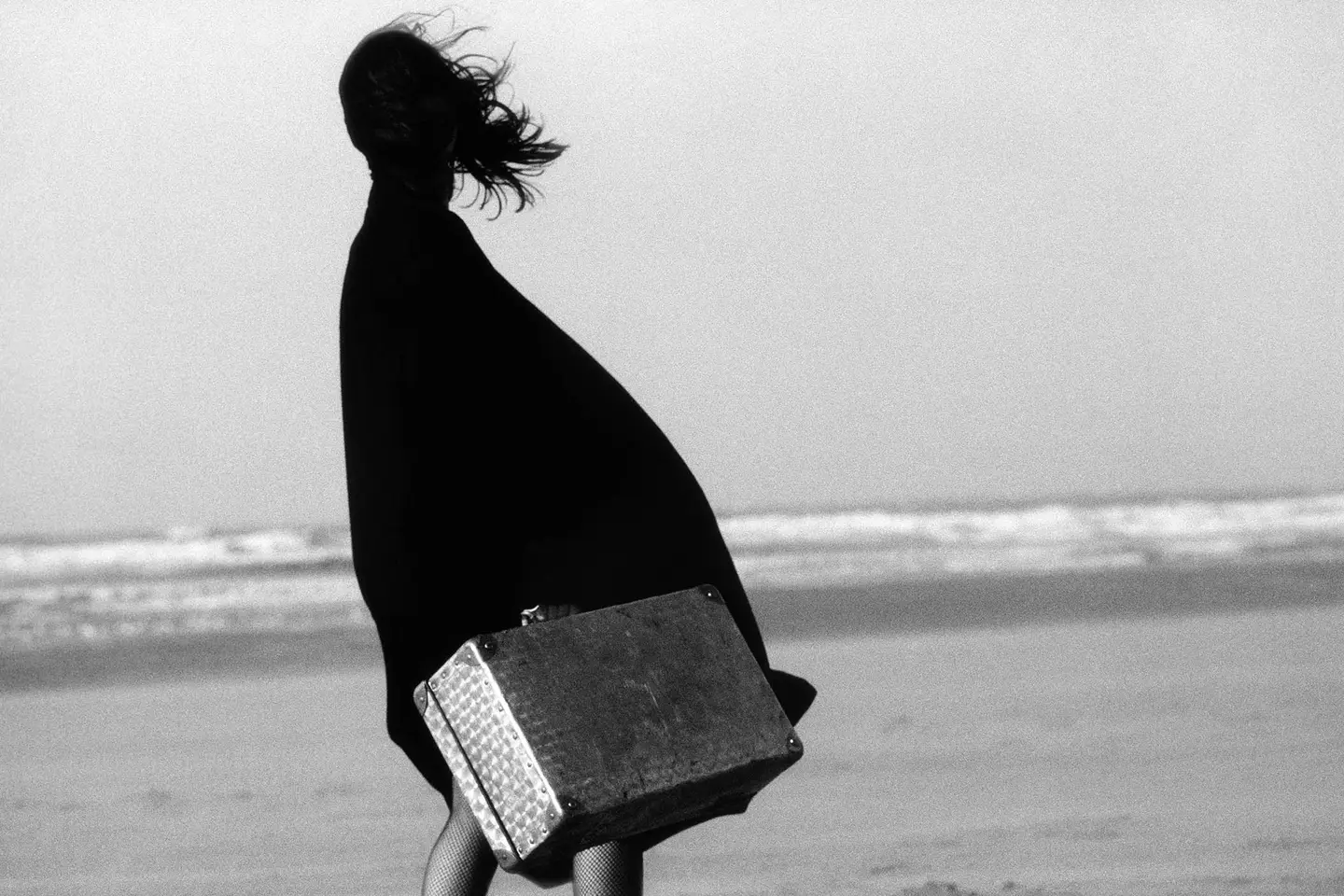
The first shows rows of ribbons and written tributes to Arthur fluttering in the wind on a fence high above the sea at Ovingdean. The second is a snatched portrait of Susie in silhouette, carrying a huge wreath along the clifftop. In the arc of the book’s visual narrative, they are arresting in their sadness and strange beauty.
“I was surprised when I saw those, too,” she says now. “But they are honest. It’s a bit like Andrew Dominik’s film, One More Time With Feeling” – a revealing documentary about Nick, released in 2016, when he was still unmoored by loss. “I love the film now, but at the time Nick and I were so unsure about it. Andrew promised we could take anything out that we were uncomfortable with. And when we first watched it, we were like, take this scene out, take that scene out, take the cliff out, take the ribbons out. It was so, so difficult to watch because we were so deep in our grief that we didn’t have a proper perspective.”
In the end, she says, they showed the film to Warren (Ellis, Nick’s main creative collaborator), hoping perhaps for confirmation of their uncertainty. “Warren just said, ‘No, keep everything in. Just keep it in, it’s real and it’s true.’” She pauses for a moment as if lost in thought, “He was right of course. That’s what really matters.”
Susie by Nick Cave (Thames and Hudson, £35). Order a copy at observershop.co.uk – 20% off for Observer subscribers
Photographs by Dominique Issermann